

Stop Telling Yourself Stories
On Changing the Narrative and Laying Down the Luggage

I’ve been suffering. Conflict in my family draws me in. It’s heavy, like a thin fog blocking the sun or the recalcitrant crackling on the airwaves when you’re trying to listen to the voice on the other end. You can ignore it, but it makes its presence felt.
I’ve sat with it a little while. I’ve talked and I’ve listened. I’ve advised and empathized. I understand all sides of it, including my own. And aside from that, I’m powerless to shift profiles or the mindsets of others.
As someone who has deep empathy for others, I have carried the weight of it. I always have. The weight of others’ stories and the emotions that energize them. And if you’re an empath, you understand how profoundly heavy this weight can get when you’ve absorbed it all.
It is at this juncture, with the weight pulling on my sleepless dreams, I understand that the stories we carry from our past create suffering in our present.
There is an old Zen story that illustrates this thought.
The Story: Two Monks and a Woman
“Two monks—one senior, one junior—were traveling together in rainy weather. They arrived at a muddy, rushing river and found a young, beautiful woman who was unable to cross.
Because of their vows, the monks were forbidden to touch or be around women. However, without hesitation, the senior monk picked the woman up, carried her across the river, placed her gently on the other side, and continued walking.
The junior monk was stunned and troubled. He remained silent for hours, brooding over the violation of their vows. Finally, unable to hold it in any longer, he blurted out to the senior monk, “We are not allowed to touch a woman! How could you carry that woman on your shoulders?”
The senior monk looked at him calmly and replied:
“Brother, I set her down on the other side of the river hours ago. Why are you still carrying her?” 1
It is the on-going narratives we carry in our heads that cause us the most suffering. Things we’ve held on to for decades. Our version of events, bound with Gorilla Glue to our beliefs, judgements and perspectives. Our dialogues and narratives that do not contain the full scope of understanding.
But, what if we reframed the narrative? What if we added a different perspective to the story that holds us captive? What if we stopped telling ourselves the same story over and over again?
But How???
Ask yourself these three questions:
1) Is this past suffering happening right now? (Obviously not, which means you’re okay, and shouldn’t be suffering.)
2) What actions have I taken to deal with this past suffering? (Surely you’ve done something other than lug it around.)
3) If what I’ve done hasn’t been enough to remove the emotional energy from the story I’m telling myself, what can I do now, so it doesn’t cause me suffering in the present or the future?
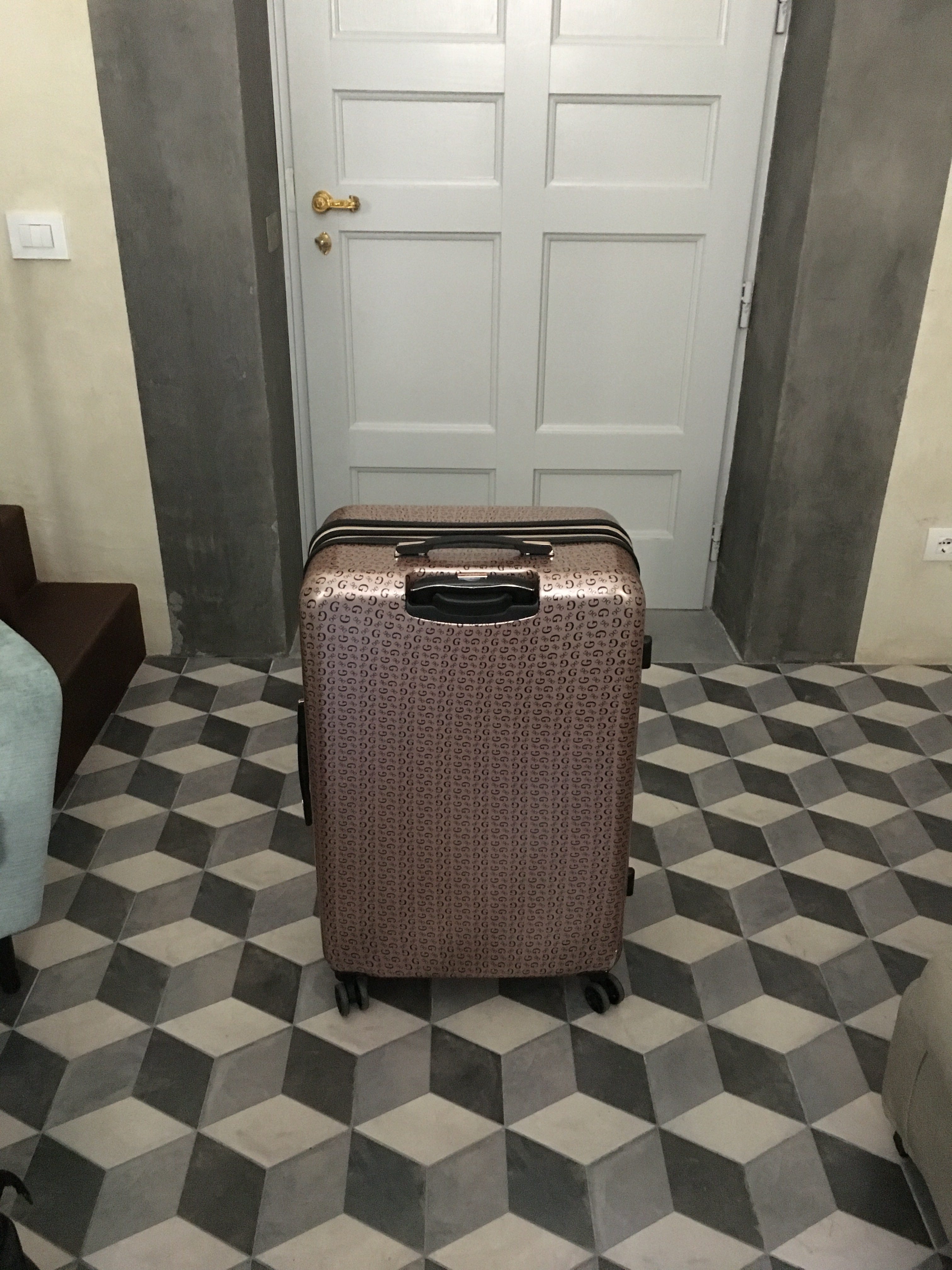
All we have is now, this moment we’re in. Imagine robbing your current joy because you chose instead to carry the weight of every past pain. Like carrying luggage without enough strength to hold it all. And I bet most of the luggage tags don’t even have your name on it.
“As I walked out the door toward the gate that would lead to my freedom, I knew if I didn’t leave my bitterness and hatred behind, I’d still be in prison.”
– Nelson Mandela2
What we can do to prevent ourselves from becoming prisoners to our own stories is to, process the emotions towards acceptance, and then leave them where they belong, behind us. Appreciate the present as the single layer of time that it is. Offer forgiveness with boundaries not avoidance. And imbue our existence with the energy of gratitude, no narratives, no interpretations, just peace.
One way to find that peace is to write out the story as you see it, and then rewrite it from the other person’s perspective. Done in earnest, it helps us understand the situation from a different perspective, revealing deeper truths and greater understanding, leading to release and our own personal growth.
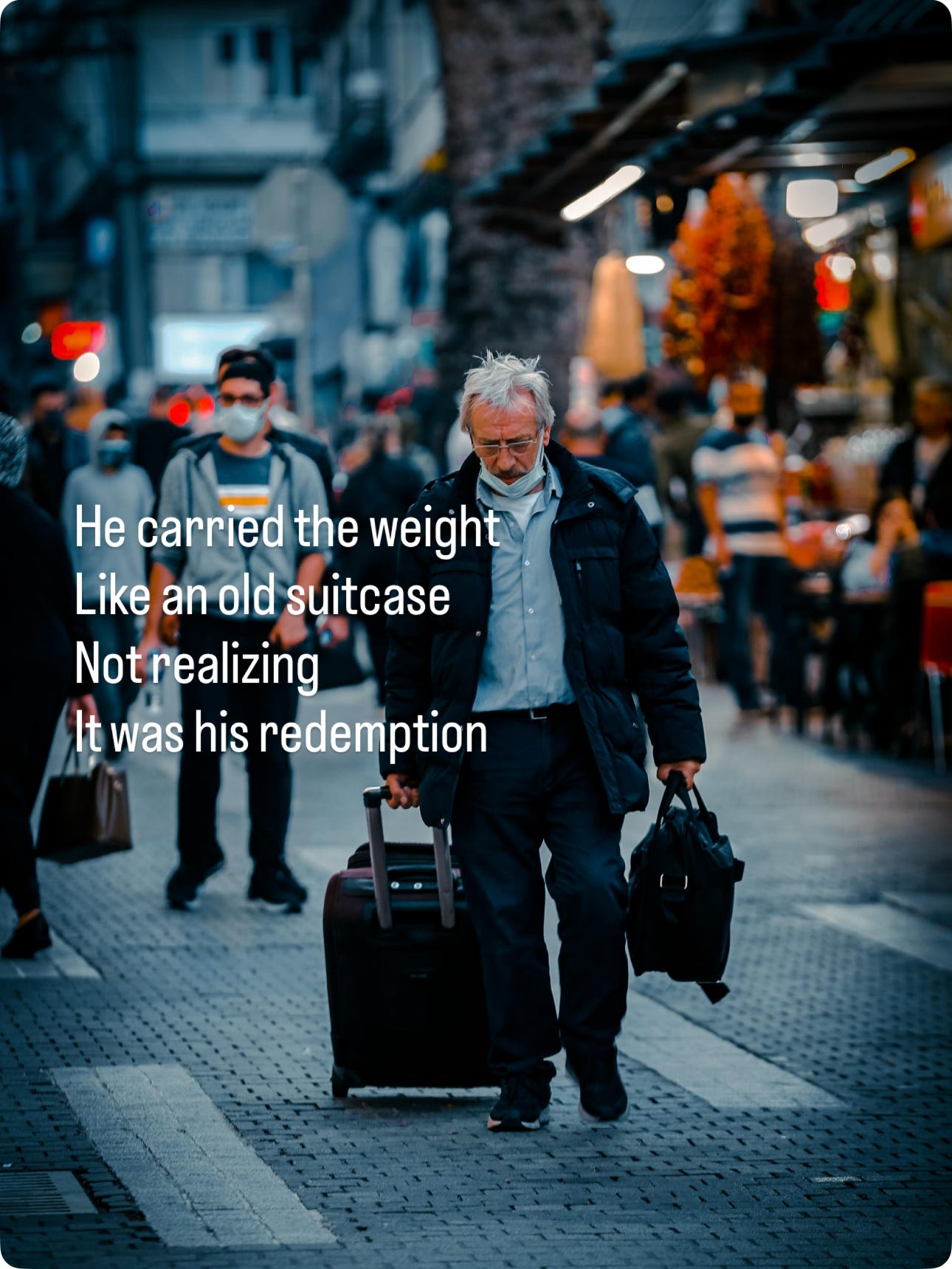
I’ve carried luggage for a long time, I’m learning to set it down. Hand it over to its rightful owner. And sometimes, just flinging it over the hills with a loud woohoo is emancipating.
Yes, it takes a powerful shift in mindset. And as that narrative changes, we begin to find and tell even better stories, with our keen attention on joy.
And yes, though I’ve been suffering, it’s not what it used to be. I only have a backpack now, filled with a few pieces that will soon be one peace, because I’ve stopped telling myself the same old stories.
What are some techniques you use to rid yourself of the weight you’re carrying?
Your writing prompt this week is, pieces and peace. See how you can use it. Use it in any form of writing that comes from your heart. I hope you’ll share whatever comes. I can’t wait to read and share.

The story of two monks is a Buddhist Zen parable often attributed to Master Hara Tanzan (1819 - 1892). It teaches that holding onto baggage and fixating on rigid rules do not serve us well. It was offered to me via Google’s AI Overview when I searched for it. It used several sources. I’m unsure how to cite this appropriately.
Nobel Peace Prize recipient and former president of South Africa, Nelson Mandela, who was incarcerated as a political prisoner for 27 years, wrote this quote in his book, The Long Walk to Freedom.
Thank you each of you, for being here. This is where we measure wealth in moments not money. If you haven’t subscribed yet, join 180 other Soullionaires by subscribing for personal growth stories and writing invitations. I know that’s a small number, but it is rich in meaning, and that’s the whole point of being a Soullionaire.
Alegria, I can really relate to your struggles here — thank you for sharing this story from the heart.
I love the Zen story you used; I use it often in my mindfulness work because it captures so beautifully how we keep carrying what was meant to be set down. Your image of luggage and weight feels especially powerful — we don’t just carry stories in our minds, but in our hearts, our muscles, our very bodies.
You asked us to share our techniques for changing the narrative, and I find myself asking: Is this story true? Is it helpful? Where does it come from? How can I acknowledge it? Sometimes I even thank the story for how it’s trying to help me, and then gently tell it it’s time to be on its way.
It’s hard to sit with these narratives with self-compassion, and brave to name them as you have. I believe change begins there; by acknowledging the story, something shifts, and by sharing it, we discover what authentically works and remember we aren’t alone. Thank you for leading the way. Wishing you peace and ease 💛✨
"It is the on-going narratives we carry in our heads that cause us the most suffering." - this is so true and something I have been trying to work on. Thank you for sharing, this is something I will come back to reflect on.